

Grey to Green SuDS Substrate®
Specialist engineered substrate for water infiltration
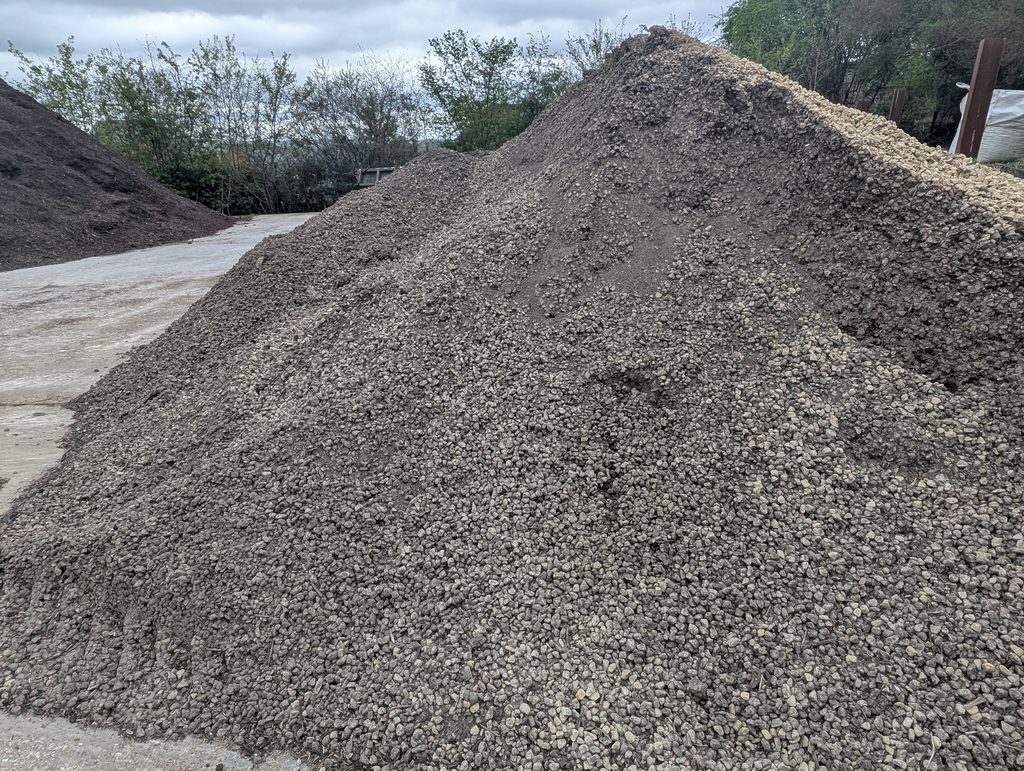
The Grey to Green SuDS Substrate® is a civil‑engineering–grade, peat‑free infiltration and planting medium designed for bioretention, rain gardens and water‑sensitive urban design. Manufactured entirely from recycled and reclaimed materials, it delivers predictable infiltration, stable pore structure and long‑term vegetation performance within SuDS systems.
Engineered substrate designed for SuDS, bioretention and rain gardens
Developed specifically for SuDS performance rather than soft‑landscape use, the substrate balances mineral fractions, organics and controlled fines to maintain permeability and structural stability. This ensures the layer operates reliably as a hydraulic medium while supporting deep‑rooted, functionally active planting.

Typical applications
Grey to Green SuDS Substrate® is suitable for:
- Rain gardens
- Bioswales
- Bioretention systems
- Detention basins
- Streetscape SuDS schemes
- Highway retrofit projects
- Public realm improvements
- Residential developments
- Commercial developments
- Climate resilience projects
Designed for long-term performance
Combine with Grey to Green Gravel Surface Mulch®
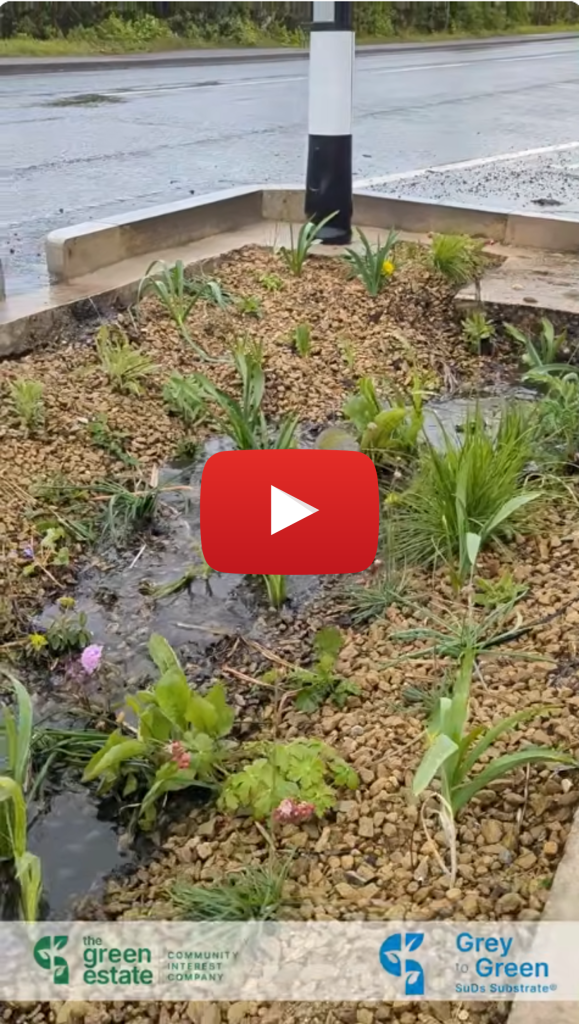
For optimum performance, Grey to Green SuDS Substrate® can be combined with Grey to Green Gravel Surface Mulch® to create a durable, stable and low-maintenance SuDS system.
Benefits include:
- Reduced long-term maintenance requirements
- Improved surface stability and durability
- Reduced weed colonisation and unwanted growth
- Enhanced visual appearance and consistency
- Protection of the underlying substrate and planting system

or email us at [email protected]

Contact us
Technical support is available for substrate selection, project-specific specification and integration with wider SuDS components.


Technical performance and hydraulic behaviour
Verified hydraulic conductivity
The substrate achieves a measured hydraulic conductivity of 2.1 mm/min, supporting consistent infiltration under field‑representative loading and moisture conditions. Testing demonstrates limited seasonal variability and stable flow pathways even after repeated wet-dry cycles.
Long‑term pore stability and low fines content
Aggregate grading and controlled fines content prevent pore collapse and reduce the risk of long‑term clogging. The matrix remains open, oxygenated and root‑permeable, supporting reliable water movement over the long term.
All‑weather and seasonal performance
The material maintains infiltration capacity during winter saturation, summer drought cycles and prolonged rainfall events. It resists compaction under pedestrian pressures and retains structural integrity through freeze-thaw cycles.

Functional role in SuDS
Distributed infiltration and runoff reduction
The substrate is designed to manage rainfall at source by allowing controlled infiltration into underlying layers or adjacent drainage features, reducing peak flows and runoff volumes.
Pollutant capture and clogging resistance
Low fines and stable pore geometry support particulate interception while preventing internal clogging. Pollutant capture primarily occurs at the upper layer, where root activity and microbial processes further break down contaminants.
Integration with rain garden and bioretention layers
The substrate sits directly below a gravel mulch or surface treatment, forming the main infiltration and treatment zone. It interfaces cleanly with filter layers, geotextiles and underdrains without fines migration.

Planting performance and ecological function
Root‑mediated structural stability
Deep-rooting SuDS species maintain pore structure, support air exchange and stabilise the substrate over time. This biological activity helps preserve infiltration rates long after installation.
Drought and saturation tolerance
The engineered mineral-organic balance ensures resilient plant communities that tolerate extended dry periods and saturation events without structural collapse or reduced permeability.
Compatibility with SuDS planting palettes
The substrate supports a wide palette of perennial species commonly specified in SuDS and nature‑based solutions, including plants used for evapotranspiration enhancement and climate‑resilient urban schemes.

Evidence‑led, field‑proven performance
Field infiltration testing
Multiple installations have been tested through permeameter and infiltration testing regimes, confirming consistent hydraulic behaviour.
Testing and performance validation
Laboratory analysis has verified aggregate grading, organics content, permeability characteristics and long‑term behaviour under compaction.
Long‑term monitoring from live schemes
Monitoring across completed project sites demonstrates stable infiltration, resilient vegetation performance and predictable pollutant interception through time.
Material composition and sustainability
The mix is 100% peat‑free, produced exclusively from recycled and reclaimed materials. Controlled sourcing ensures consistent specification and reduces embodied carbon relative to peat‑based or virgin mineral alternatives.
Compliance and alignment with SuDS guidance
The substrate supports design principles set out in the CIRIA SuDS Manual (C753) and is compatible with typical local authority requirements for bioretention design, infiltration media, water quality treatment and long‑term maintenance expectations.
Applications
- Bioretention cells
- Rain gardens
- Linear bioretention/green streets
- Bioswales
- Permeable landscape systems
- Retrofit SuDS schemes where structural stability and predictable infiltration are required
Technical specifications
Typical specification parameters (project‑specific versions available on request):
- Hydraulic conductivity: 2.1 mm/min
- Particle size distribution: engineered grading with controlled fines
- Bulk density: designed for stability without compaction
- Air‑filled porosity: maintained through mineral/organic balance
- Organic matter: controlled for stability, nutrient availability and hydraulic consistency
- Peat content: 0%


Frequently Asked Questions
What is the best substrate for SuDS bioretention systems?
An engineered substrate with controlled grading, predictable infiltration, low fines and stable pore structure – characteristics delivered by the Grey to Green SuDS Substrate®.
How does the substrate maintain hydraulic conductivity over time?
Through controlled fines, pore stability and root‑mediated aeration that prevents clogging.
Is the substrate compliant with the SuDS Manual?
It aligns with the hydraulic, soil structure and treatment requirements set out in CIRIA C753.
Why is peat-free substrate important in SuDS?
Peat introduces decomposition risks, variable permeability and high carbon impact. A peat‑free mix improves consistency and sustainability.
What maintenance is required?
Maintenance generally focuses on vegetation management and surface‑layer inspection.
Contact us
Technical support is available for substrate selection, project-specific specification and integration with wider SuDS components.