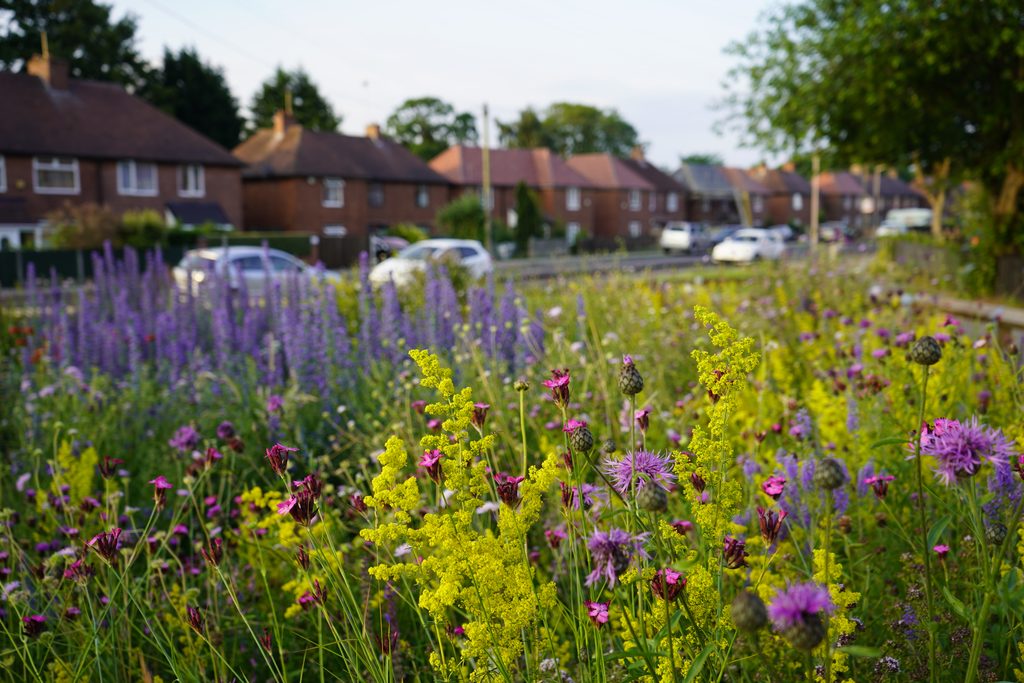
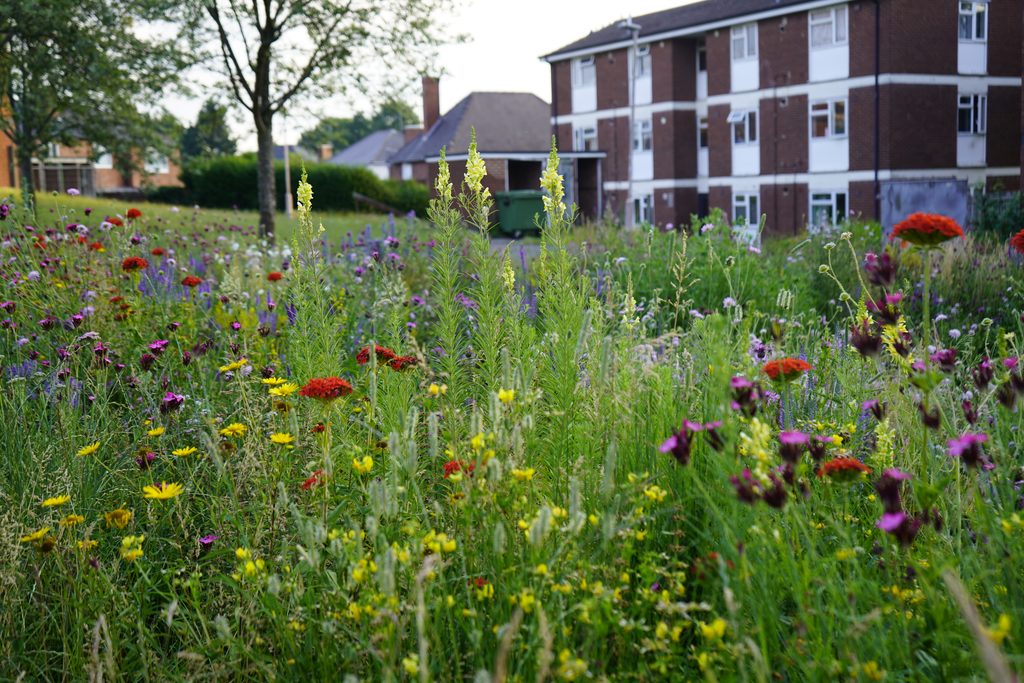
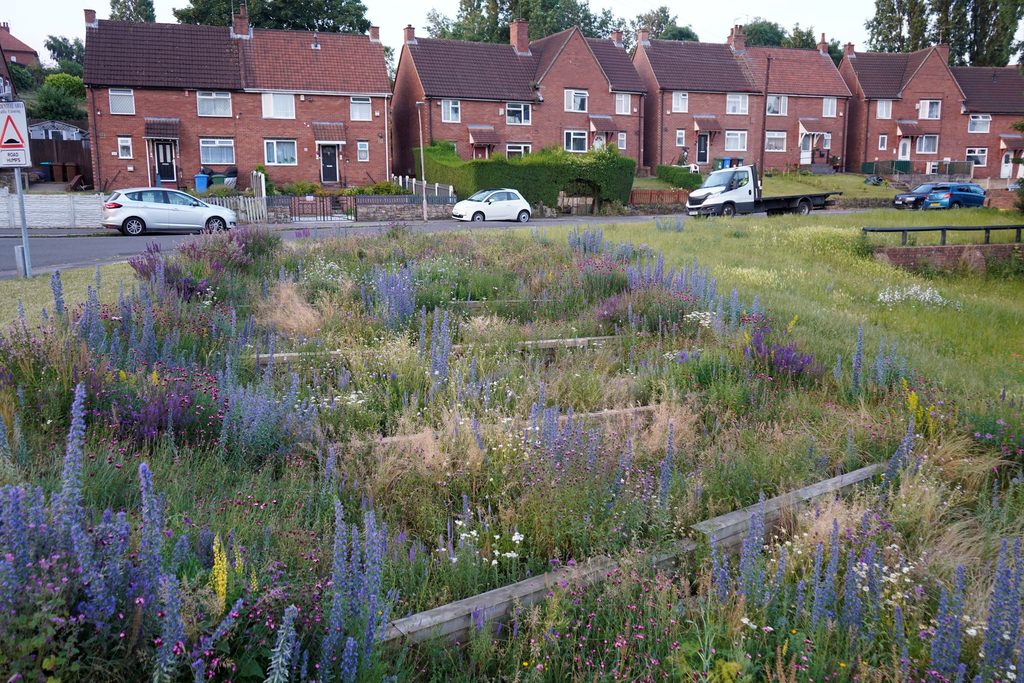
Managing rainfall where it lands can reduce pressure on conventional drainage infrastructure. At Mansfield, Severn Trent Water used nature-based solutions and SuDS as part of its approach to managing surface water and reducing flood risk.
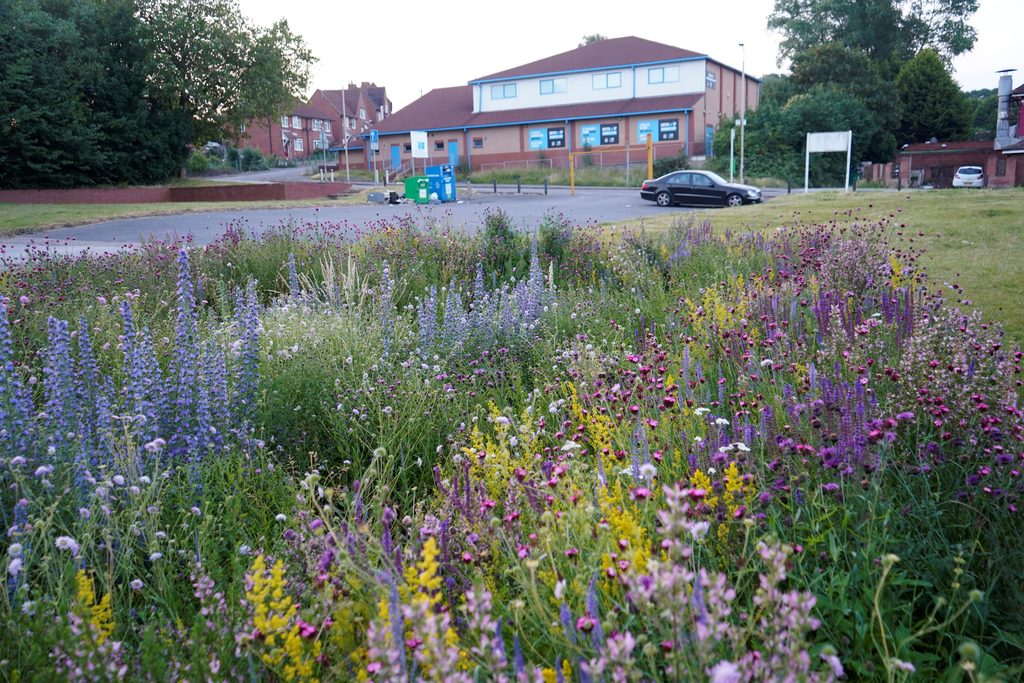
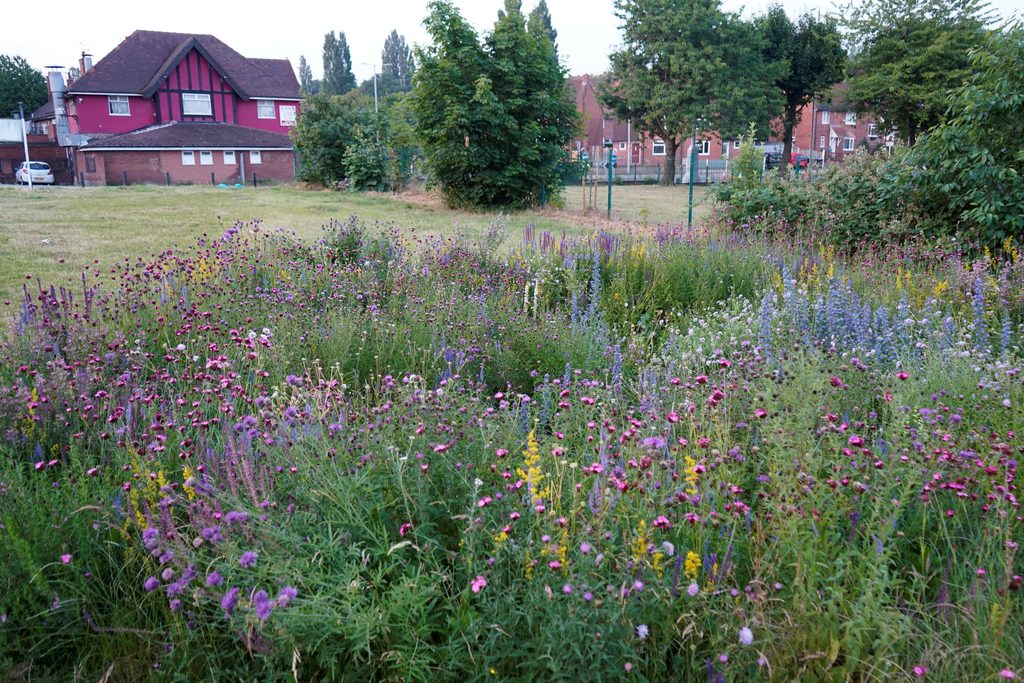
In collaboration with Severn Trent and various contractors, Grey to Green provided an engineered substrate and planting solution for a £76 million Sustainable Urban Drainage System (SuDS) scheme in Mansfield. Designed to protect the town from flooding, the scheme incorporates a variety of nature-based solutions such as bioswales, detention basins and rain gardens.
Developed by The Green Estate CIC and Pictorial Meadows®, Grey to Green brings together specialist engineered growing media; resilient mixes of pre-planted meadow turf and pots; horticultural expertise; and establishment knowledge, into a solution that recognises the soil and planting as integrated components of a complete functioning system.
Working collaboratively with Severn Trent Water, Galliford Try, Kier, SISK and Ground Control, Grey to Green delivered a solution able to manage over 31 million litres of water, significantly alleviating flood risk in the area.
Through horticultural knowledge and establishment expertise, Grey to Green combined specialist substrate engineered to civil engineering standards, with designed planting and over 25,000 sqm of grown-to-order meadow turf, in order to speed up installation and maximise longevity. The integrated solution works as a complete, functioning nature-based system and covers 300 SuDS features, significantly reducing flooding in hotspots during storms, benefiting over 90,000 residents.
“Galliford Try’s partnership with The Green Estate was integral to the success of the project for our client, Severn Trent. “They provided valuable insight to help manage the process of large-scale plant procurement and backed this up with efficient installation to meet the programme.”
Rob Ward, Operations Manager, Galliford Try
Specialist substrate
The Green Estate developed a specialist substrate for the SuDS features, crafted from locally-sourced, peat-free, reclaimed and recycled materials.
This substrate is engineered to manage water infiltration and retention according to design principles set out in the CIRIA SuDS Manual (C753), while providing optimal growing conditions for a range of ornamental and ecological plants.
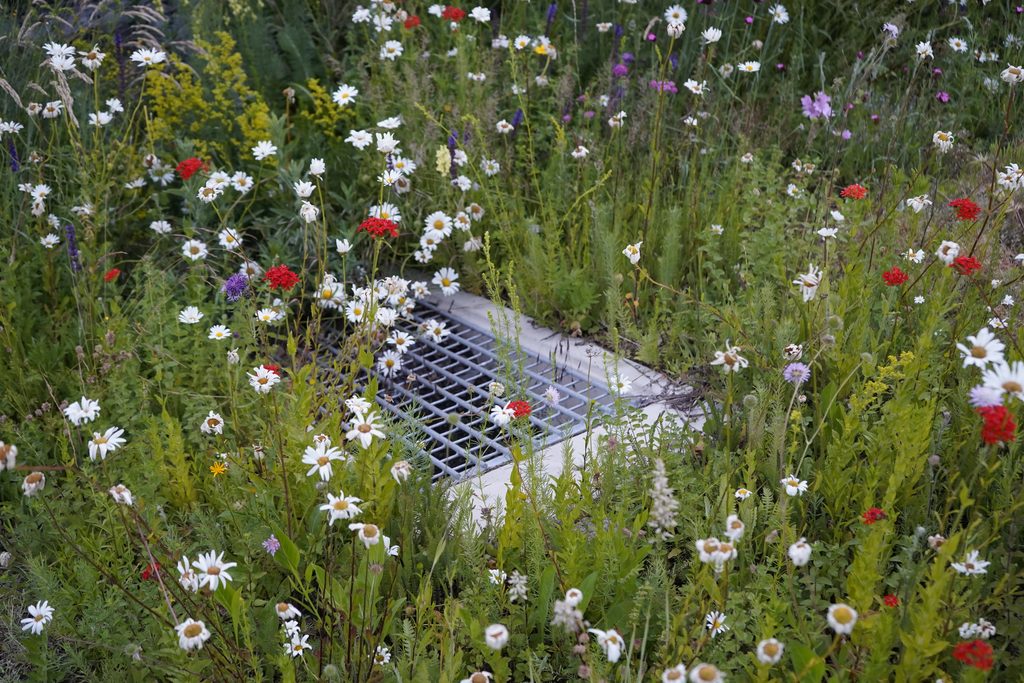
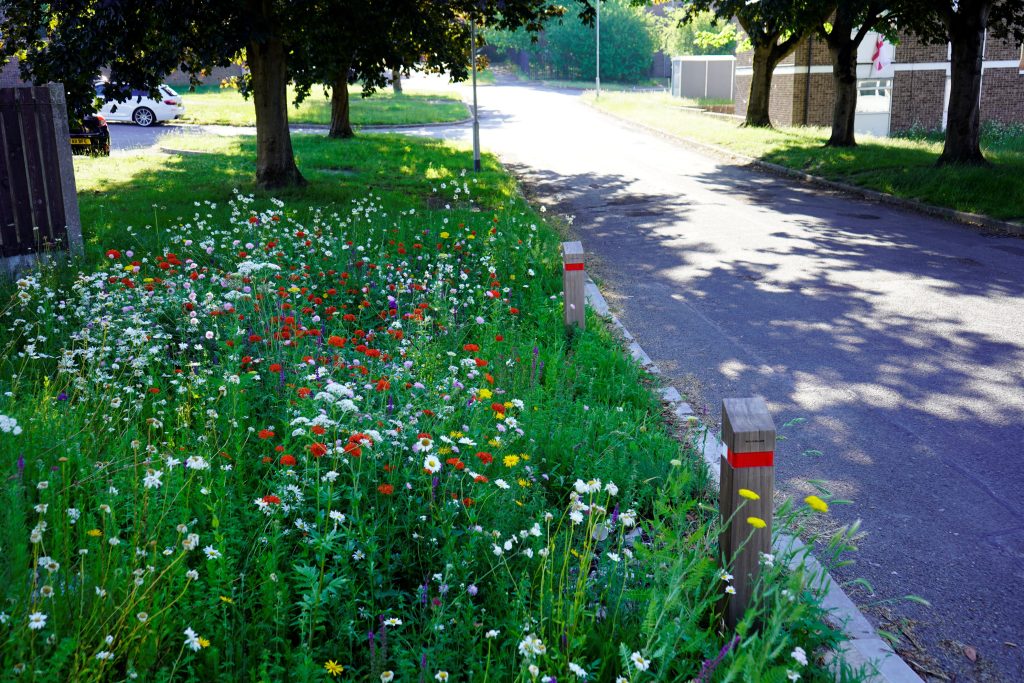
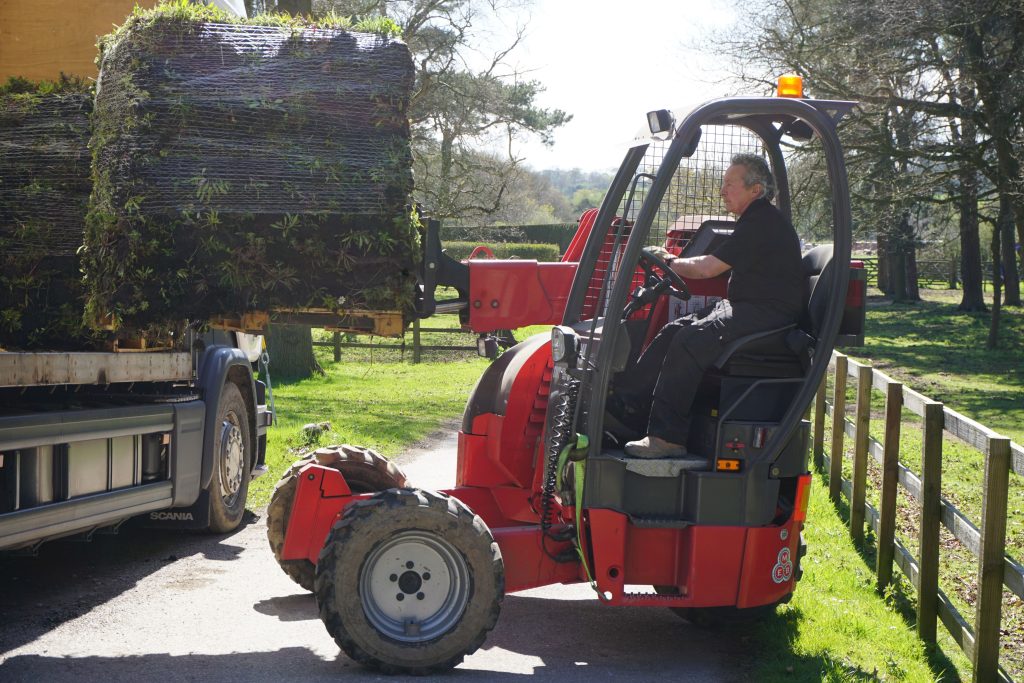
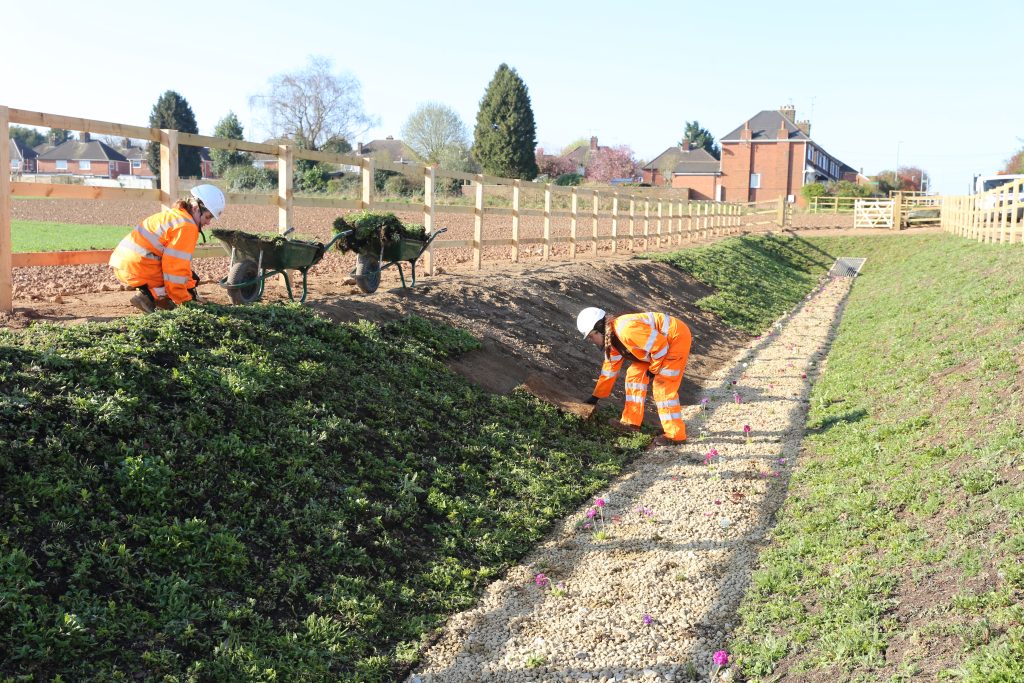
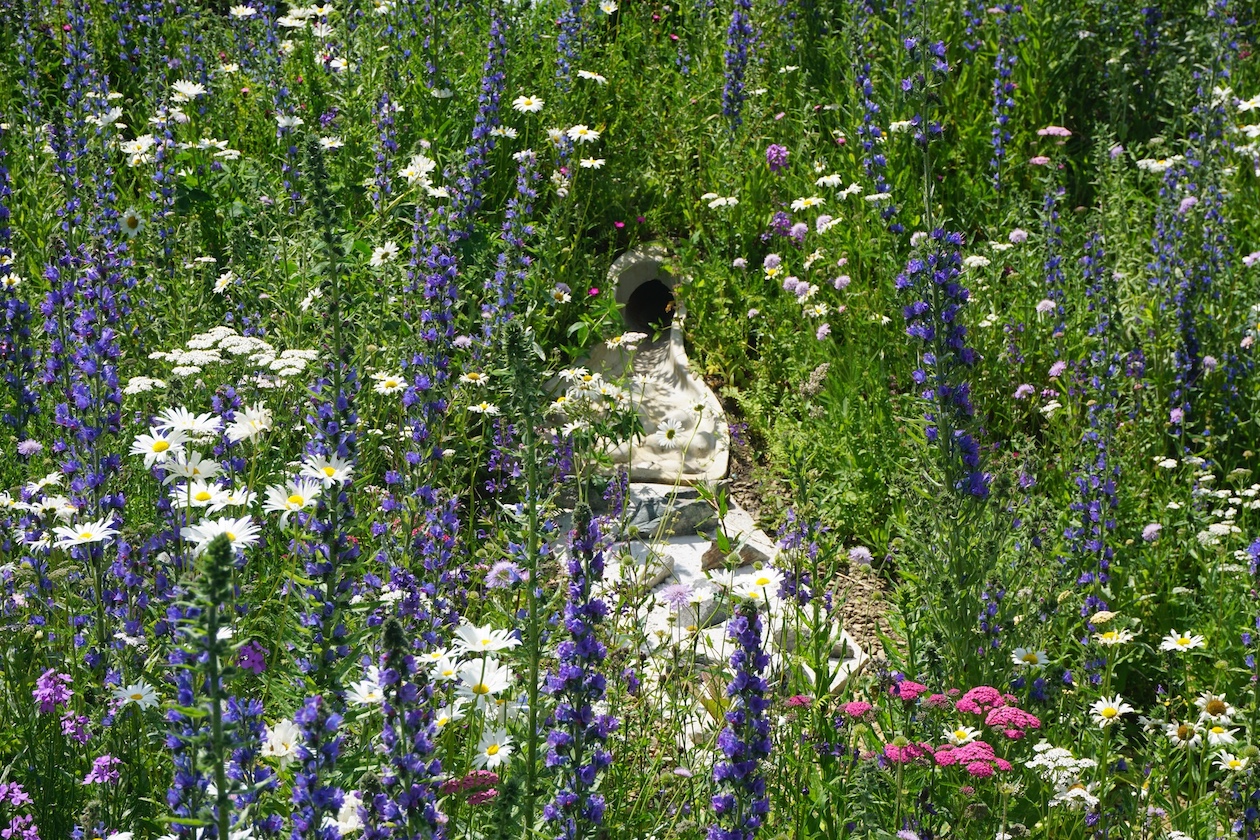
Installation was expedited by using Pictorial Meadows’ Turf® in many of the rain gardens and bioswales. Contract-grown for this project, this provided over 3 million quality-controlled perennial plants. Pre-grown and established on peat-free, plastic-free meadow turf mats, the turf was delivered to site in bulk and then lifted and laid on the prepared ground by the Grey to Green team at a rate of 150,000 plants per day.
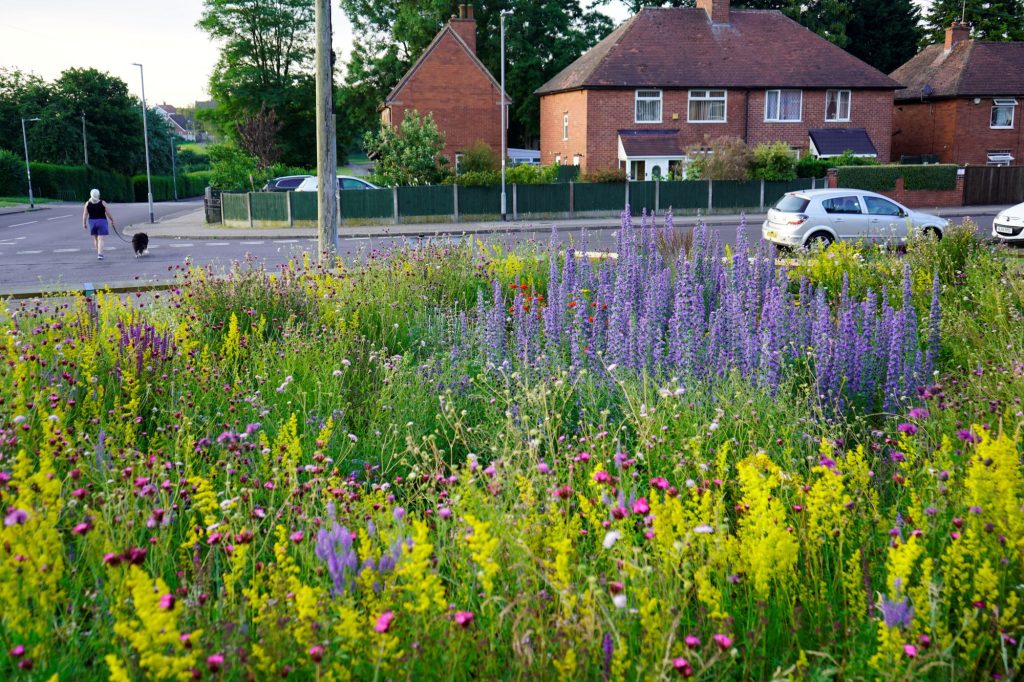
The solution was completed with over 40,000 P9 plants specifically designed for bioswales, detention basins and rain gardens. By carefully selecting combinations and quantities of species proven to thrive together, the pre-designed SuDS mix enhanced biodiversity and ecological functionality whilst enabling the Grey to Green team to set out and install the planting much quicker than the client had anticipated.
The project has already provided a host of benefits to the local area and community:
improved urban biodiversity
enhanced public spaces
improved air quality
reduced pollution
boosted community interest and wellbeing
supported pollinators
contributed to mitigating the urban heat island effect.
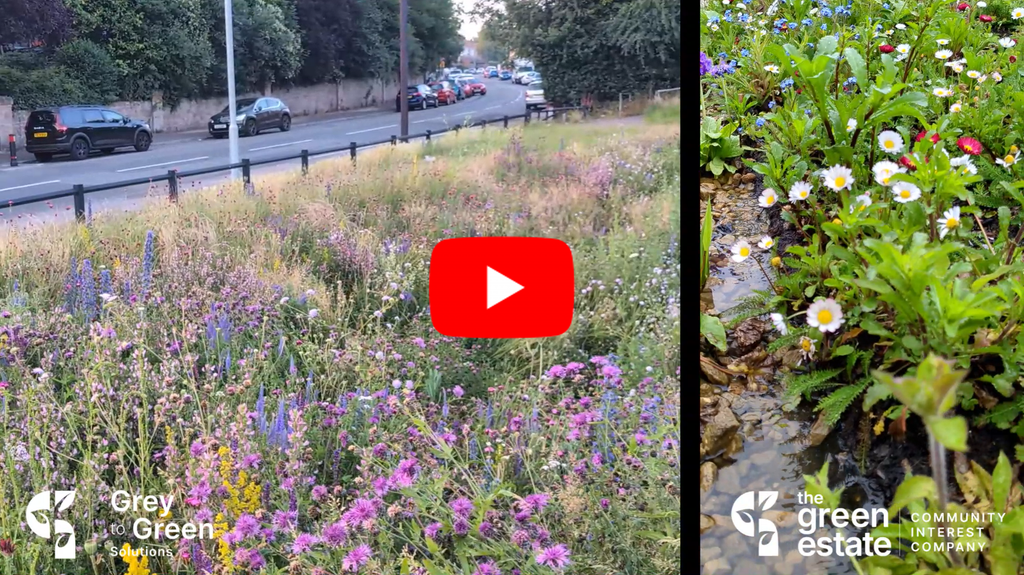
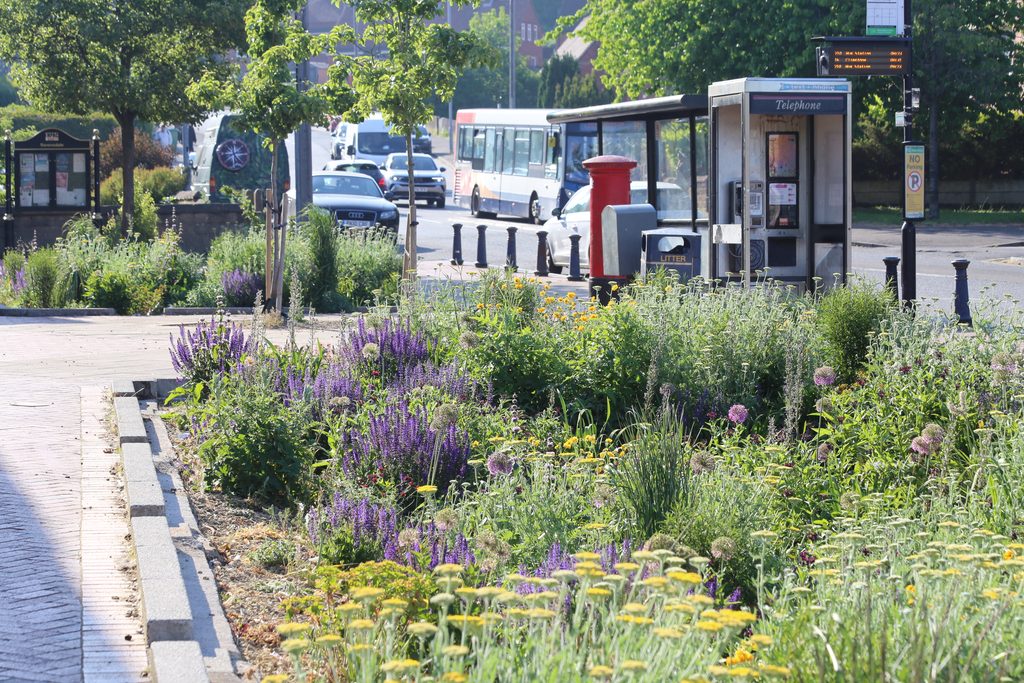
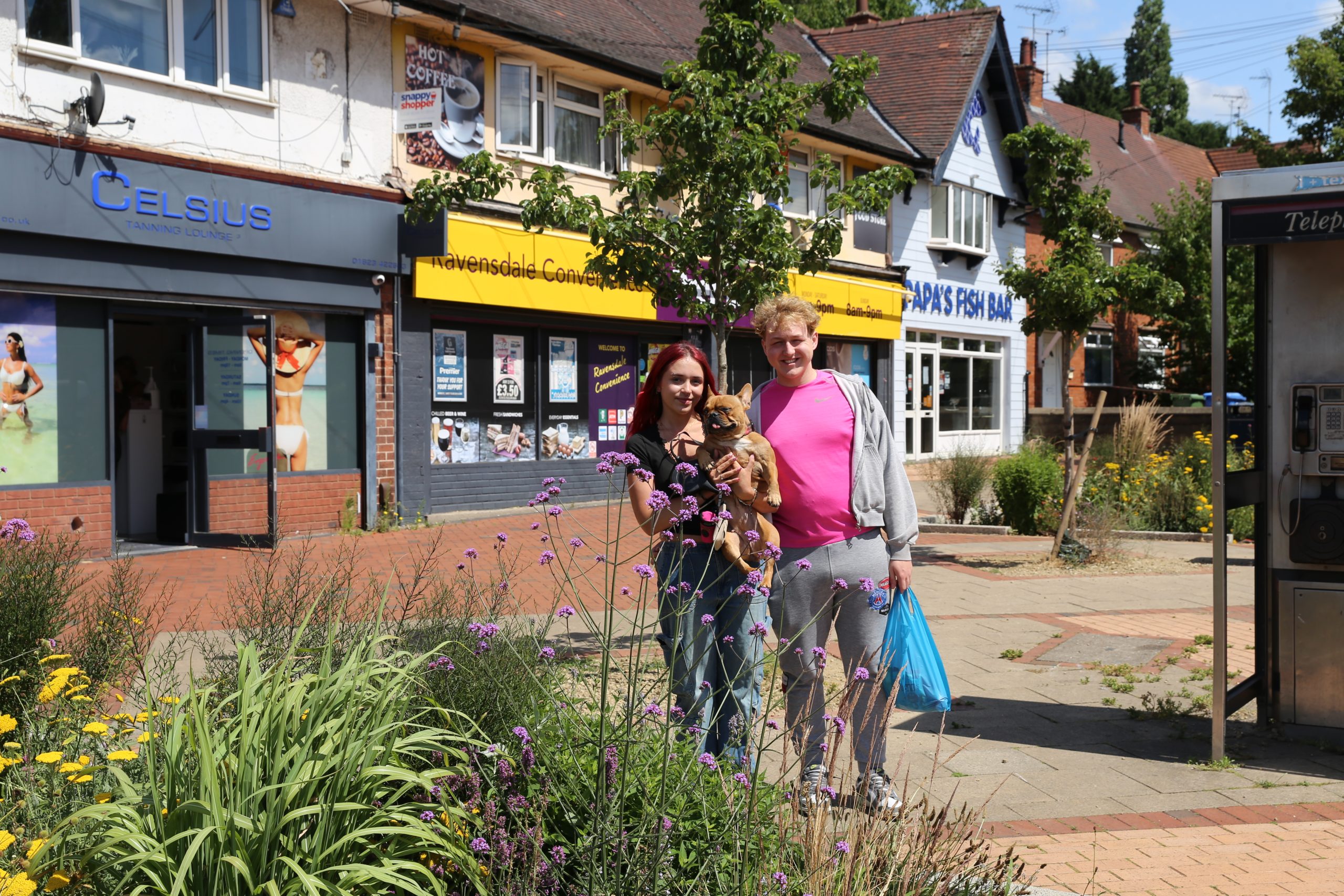
Key areas such as Mansfield’s historic marketplace have been revitalised with vibrant rain gardens to make them greener, more attractive and more enjoyable for residents; encouraging more people to visit the amenities, boosting the local economy.
“It should be in more places because it looks nice and it actually does the job and reduces flooding.”
Olivia and Josh, local residents
Designed for long-term performance
Following the initial planting, Grey to Green Landscape Managers provided expert guidance on long-term maintenance. Whilst this incorporated irrigation, weed control, cutting, green biomass collection for composting, silt removal, and the replacement of any soil and plant losses, the style of planting reduces the need for maintenance visits compared to alternatives. This helped to ensure the long-term establishment and performance of the planting and therefore the project’s long-term resilience and effectiveness, ensuring the SuDS features thrive for years to come.