21 August, 2026
Parch marks reveal a hidden medieval hunting lodge at Sheffield Manor Lodge
By Dr Hannah Wallace
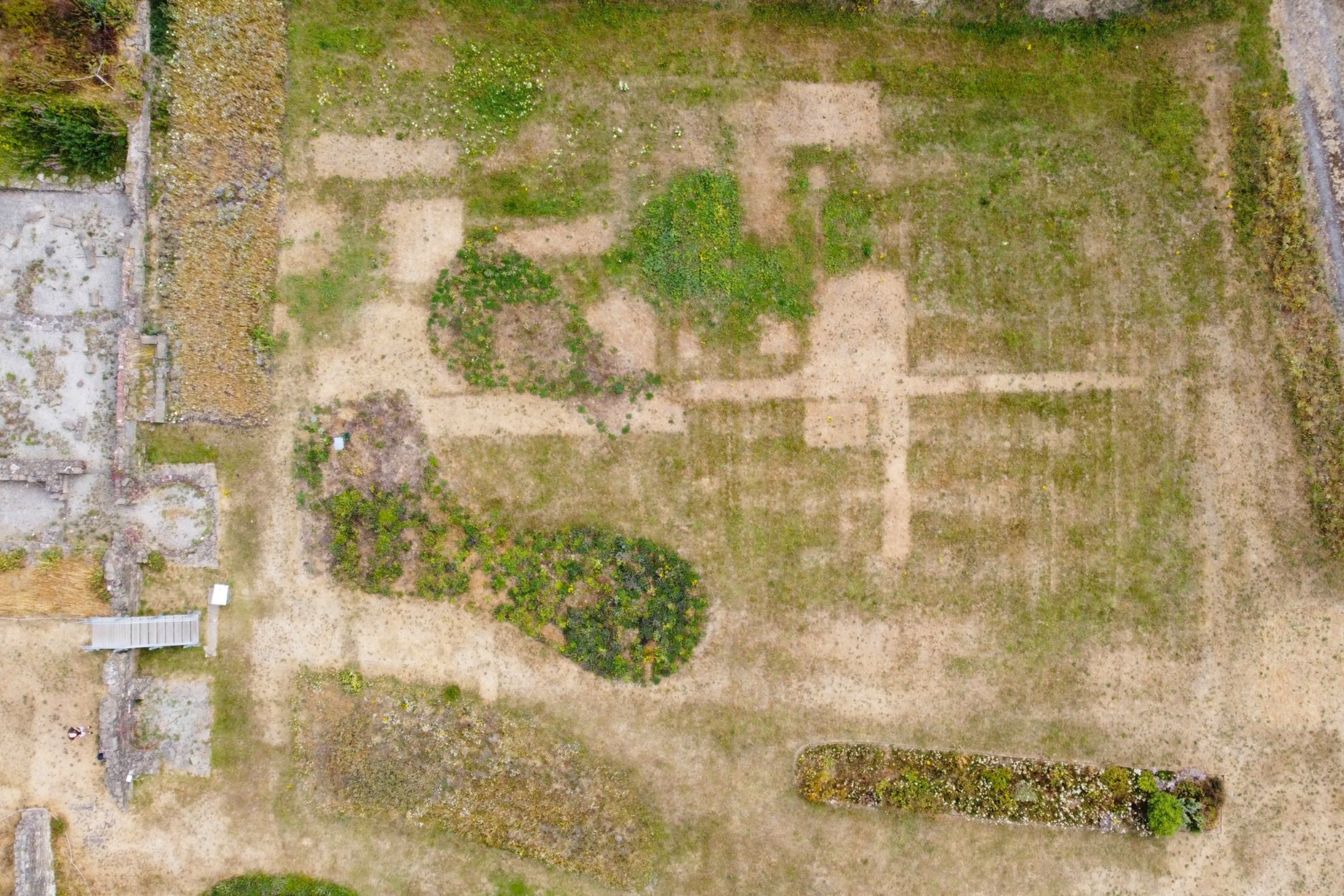
There’s always been so much more to Sheffield Manor Lodge than meets the eye, but recent heatwaves have revealed a whole new way of looking at our history. The hot weather has revealed hidden foundations of a medieval hunting lodge, the first known building on the site, built long before the grand Tudor Manor where Mary, Queen of Scots was imprisoned.
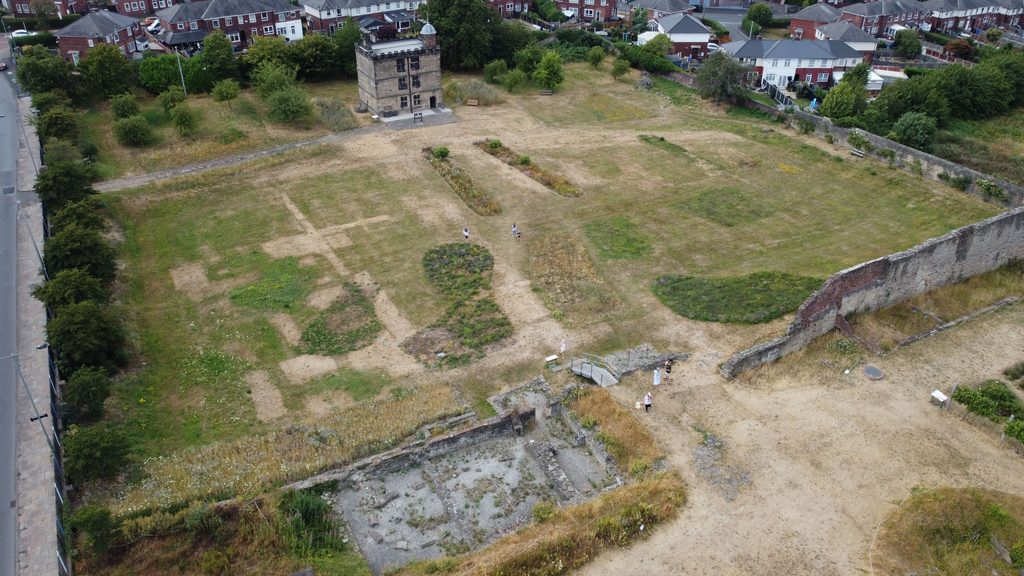
Usually completely hidden under the grass, the recently appeared parch marks have revealed evidence of walls and towers from the hunting lodge, which predate the Turret House by at least 100 years. The first surviving record of this building is from 1479 when an entry in an account book reveals George Talbot, the 4th Earl of Shrewsbury, paid for repairs to the hunting lodge. While this is the first written evidence of the building, it does suggest that the building was there for some time before 1479.
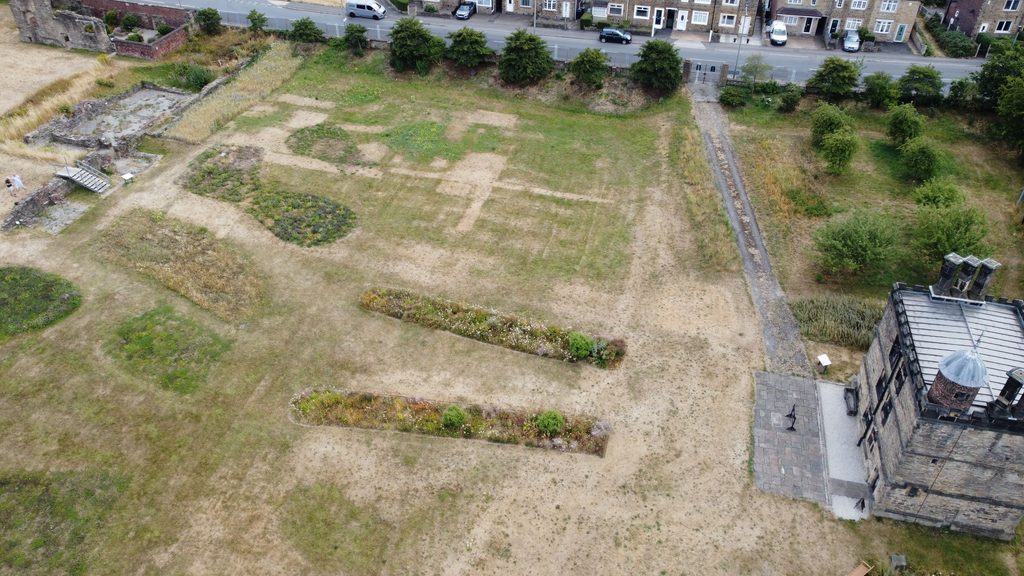
The hunting lodge was built to make the most of Sheffield’s deer park, once one of the largest in England, where the Earl of Shrewsbury and his guests could enjoy feasting, hunting and socialising. At its height, the deer park had a circumference of eight miles and was home to around 3,000 fallow deer. The building would have also made the most of the views towards Sheffield Castle, the Earl’s main home. The hunting lodge shows there was a connection between Manor Lodge and Sheffield Castle which existed long before Mary, Queen of Scots’ fourteen-year imprisonment in Sheffield. While the Castle was a place of business and security with its high walls and drawbridge, the Lodge became a place to escape the busyness of the Castle and entertain visitors in luxury.
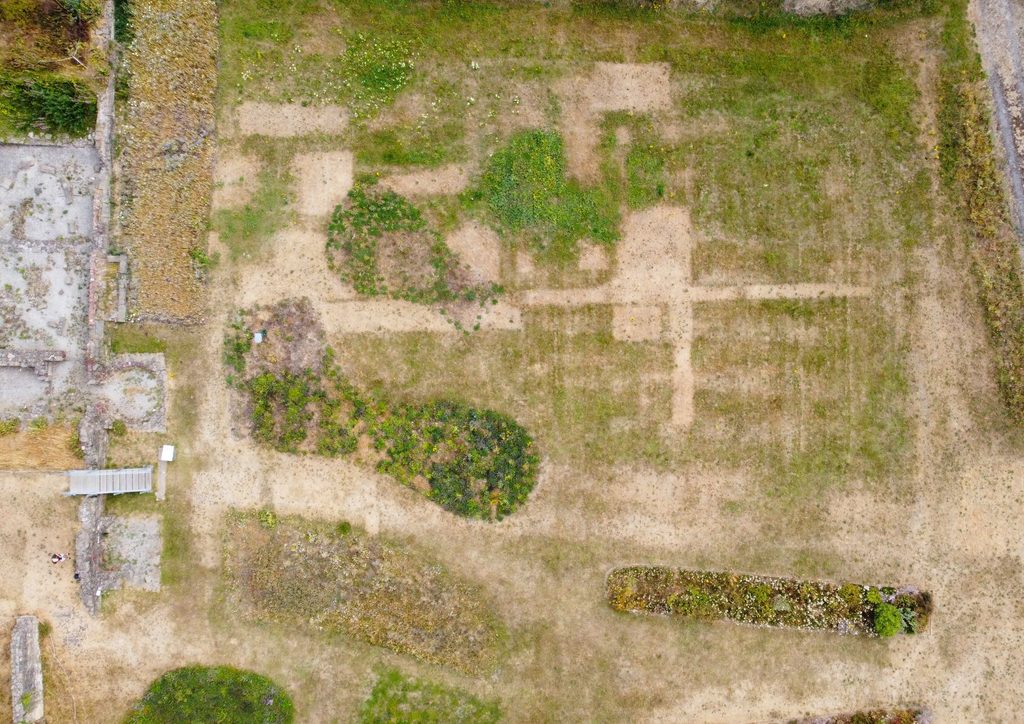
Parch marks with archaeologist’s drawing of the hunting lodge and test pits. The original Tudor road connecting the Turret House to the Tudor Manor is also visible.
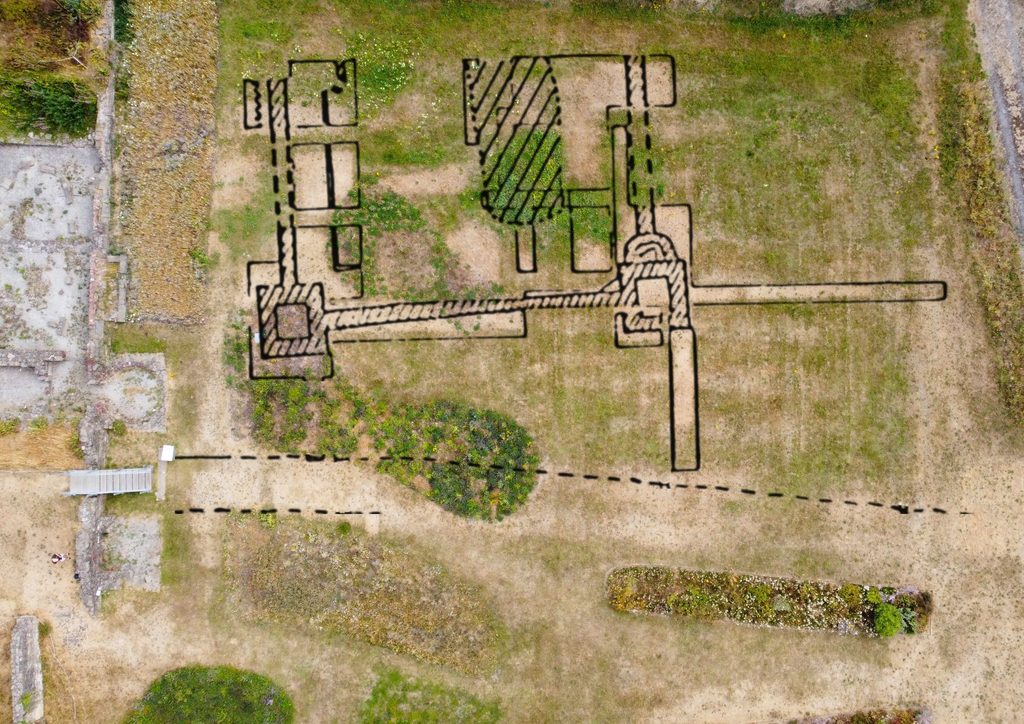
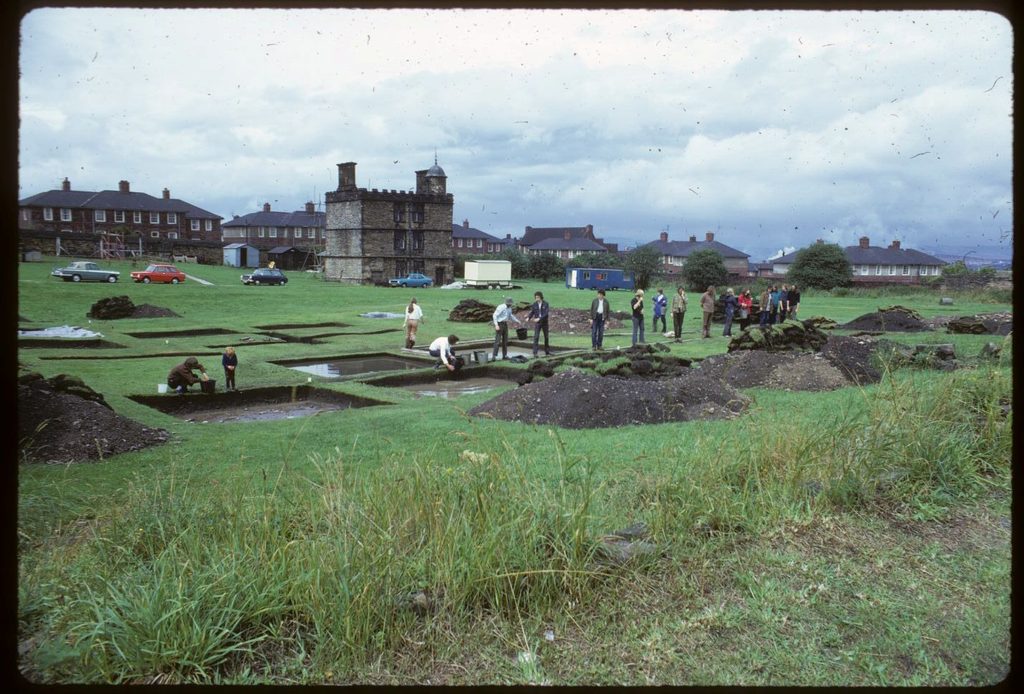
We know more about the original hunting lodge because of archaeological digs done in the early 1970s, which discovered the foundations of its walls and towers. The finds included pottery, window glass and lots of deer bones, suggesting that guests made the most of the surrounding deer park. The dig was one of many undertaken annually between 1968 and 1980 by Sheffield City Museums, volunteers and school children. Unfortunately for them, photos from this particular dig suggest the team didn’t enjoy much dry weather and instead spent a lot of time moving rainwater from their test pits by the bucket load. The square trenches from their dig can also be seen in the parch marks inside the hunting lodge walls.
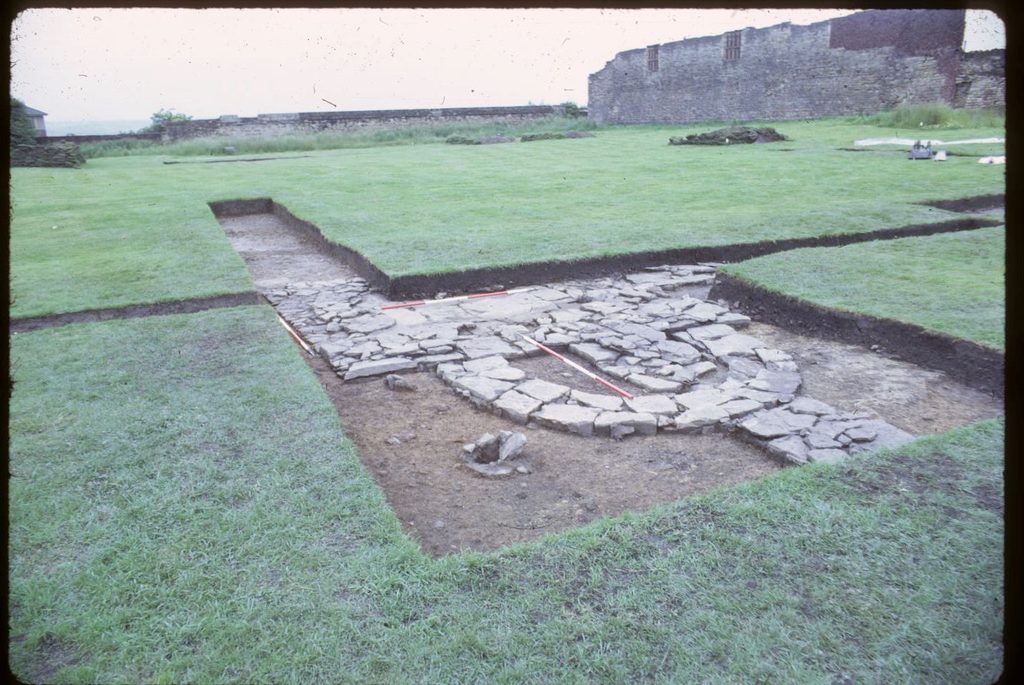
Archaeologists discovered that the hunting lodge was carefully dismantled towards the end of the sixteenth century when the Tudor Manor House was extended, as the walls they found were only a few stones high, suggesting the stone had been carefully taken away and reused for other projects. Interestingly, their findings do mean that the hunting lodge existed alongside the Tudor Manor for decades before it was eventually pulled down around the time Mary, Queen of Scots stayed at Manor Lodge.
For many years, the medieval hunting lodge remained hidden from view. Recent heatwaves are a powerful reminder of the need to do more to protect our heritage and environment in a changing climate. It is also a reminder of just how much we have to protect. Beneath our feet there is so much to appreciate, as well as a reminder to be thankful for the people who help to discover it.
Many thanks to Jon Davies for supplying the aerial photos